Introducing the Tyrereview.com.au Tyre Size Calculator
01 Jan 1970
Find the Right Fit: Introducing the Tyrereview.com.au Tyre Size Calculator
Choosing the right tyre is not only about brand, price, or tread pattern. It starts with fitment.
At Tyrereview.com.au, we know a great tyre review is only useful if the tyre actually suits your vehicle. That is why we have built the Tyrereview.com.au Tyre Size Calculator: a simple tool designed to help Australian drivers check tyre sizes, compare alternatives, and make more confident buying decisions.
For many drivers, tyre sizing can feel unnecessarily confusing. Codes such as 225/55R17 or 265/65R17 are printed on every tyre sidewall, yet most people are never taught what they mean. Even small changes in size can affect speedometer accuracy, vehicle clearance, handling, fuel economy, load rating, and legality.
Our calculator helps remove the guesswork. Enter your vehicle details or current tyre size, compare suitable alternatives, and check how a different size may affect your vehicle before you buy.
Take a Look ! Tyre Size Calculator Australia | Compare OE & Plus Sizes
Why Tyre Size Matters
Many drivers assume that if a tyre fits the rim, it is suitable for the car. Unfortunately, that is not always true.
An incorrect tyre size can create several issues, including inaccurate speedometer readings, reduced clearance, higher fuel consumption, poor handling, accelerated suspension wear, and potential insurance or legal problems.
This is especially important for popular Australian vehicles such as utes, SUVs, 4WDs, performance cars, and electric vehicles. A larger all-terrain tyre may look better and provide more sidewall protection off-road, but it may also affect gearing, braking, clearance, and load capacity. A lower-profile performance tyre may improve steering response, but it can also reduce comfort on rough roads.
The Tyrereview.com.au Tyre Size Calculator gives drivers a clearer way to compare tyre sizes before making a decision.
How the Tyre Size Calculator Works
The calculator is designed to be quick and easy to use, whether you are researching from home or standing in a tyre shop.
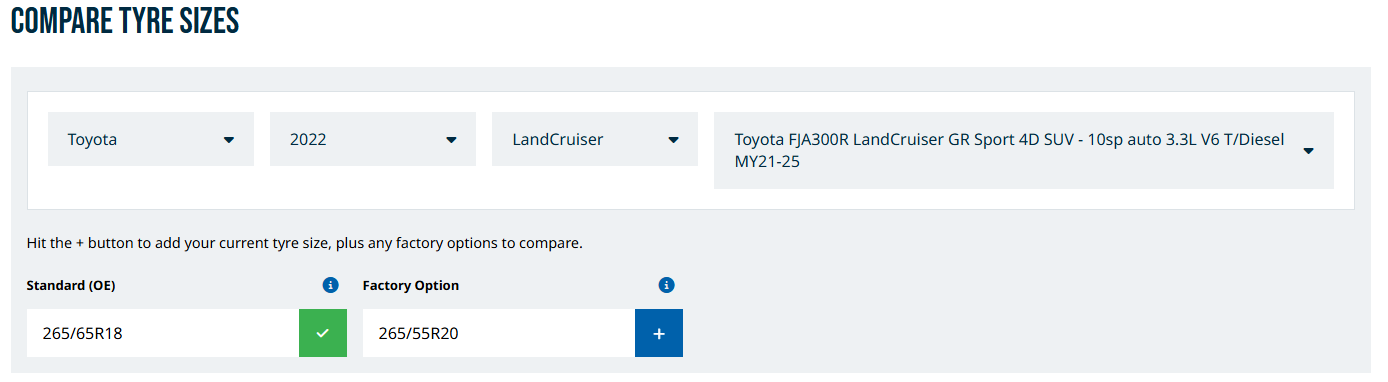
Step 1: Enter Your Vehicle or Current Tyre Size
Start by entering your vehicle make, model, and year, or type in your current tyre size directly. The calculator then shows the relevant factory tyre size and allows you to compare it with alternative options.
This is useful if you are replacing your original tyres, checking a size recommended by a tyre shop, or considering an upgrade.
Step 2: Compare Recommended and Alternative Sizes
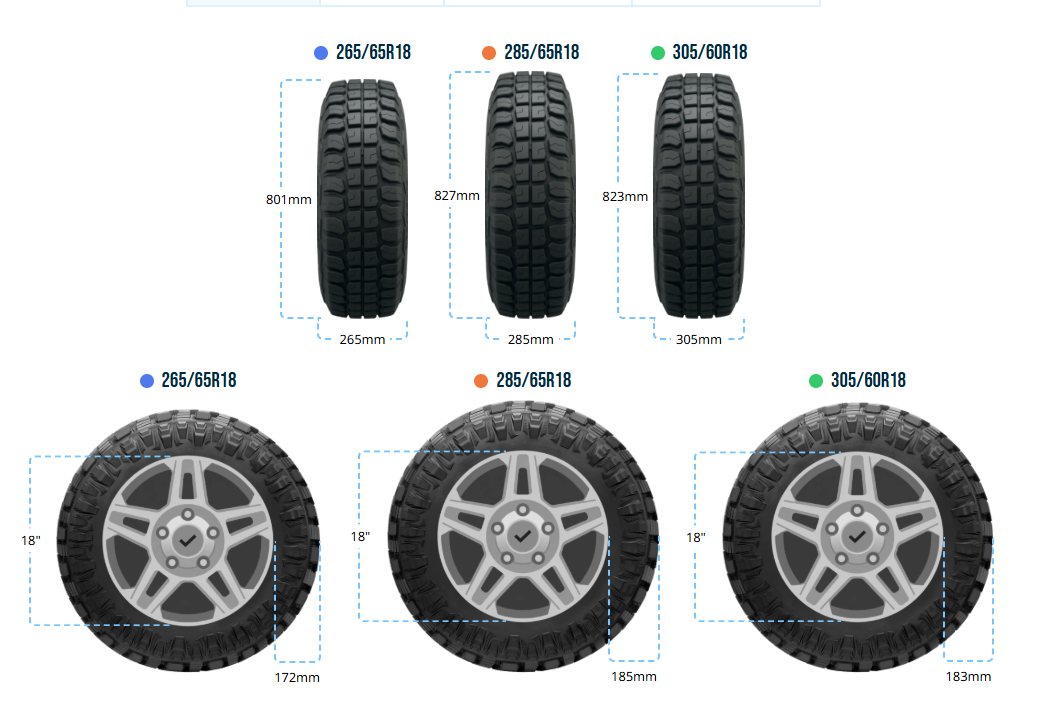
Once your tyre size is entered, the calculator helps you compare overall diameter, width, sidewall height, and rolling circumference.
This makes it easier to understand how a proposed tyre size differs from your current setup. For example, moving from a 265/65R17 to a 265/70R17 may sound like a small change, but it can noticeably alter ride height, gearing, speedometer accuracy, and clearance.
Where available, recommended sizes can also be linked with Tyrereview.com.au’s tyre reviews, helping you see how specific tyres perform in the real world.
Step 3: Check Speedometer Difference
Changing tyre diameter affects how many times the wheel rotates over a given distance. This can change your speedometer reading.
The calculator shows the estimated speedometer difference so you can see whether a new size may cause your speedo to read higher or lower than your actual road speed.
This is especially important for drivers considering larger tyres on 4WDs, utes, and SUVs.
Why This Calculator Is Different
Many online tyre calculators only compare numbers. They show the difference in diameter or circumference, but they do not always help drivers understand what those numbers mean in practice.
The Tyrereview.com.au Tyre Size Calculator is designed for real-world tyre decisions. It helps Australian drivers compare tyre sizes in a practical way, then connect that information with tyre reviews from people who have used those tyres on local roads.
That matters because tyre choice is not purely mathematical. A size may look suitable on paper, but drivers also need to consider load rating, speed rating, rim compatibility, road conditions, vehicle use, towing, off-road driving, and comfort.
By combining tyre size comparison with review data, Tyrereview.com.au gives drivers a more useful starting point.
Common Reasons to Use the Calculator
Upgrading a 4WD or Ute
Many Australian 4WD and ute owners consider larger all-terrain or mud-terrain tyres for extra ground clearance, sidewall protection, and off-road capability.
The calculator helps show how a larger size affects overall diameter, speedometer accuracy, and fitment compared with the original size. This is useful for vehicles such as the Toyota HiLux, Ford Ranger, Isuzu D-MAX, Mitsubishi Triton, Nissan Patrol, and Toyota LandCruiser.
Replacing Tyres on a Performance Car
Drivers of performance cars and hot hatches often consider wider or lower-profile tyres for improved steering feel and grip.
The calculator helps compare the original size against possible alternatives, making it easier to understand the trade-offs between grip, ride comfort, wheel protection, and speedometer accuracy.
Finding a More Available or Affordable Size
Some tyre sizes are less common and can be more expensive. In some cases, a closely related size may be easier to find or better priced.
The calculator helps drivers compare possible alternatives before speaking with a tyre shop or making a purchase. It is still important to confirm that any alternative size is suitable for your specific vehicle, wheel, and legal requirements.
Understanding Tyre Size Codes
A tyre size such as 225/55R17 can be broken down into four key parts.
225 refers to the tyre width in millimetres.
55 is the aspect ratio, meaning the sidewall height is 55% of the tyre width.
R means the tyre has radial construction, which is standard for modern passenger tyres.
17 refers to the wheel diameter in inches.
Understanding these numbers makes it easier to compare tyre sizes and see how a change may affect your vehicle.
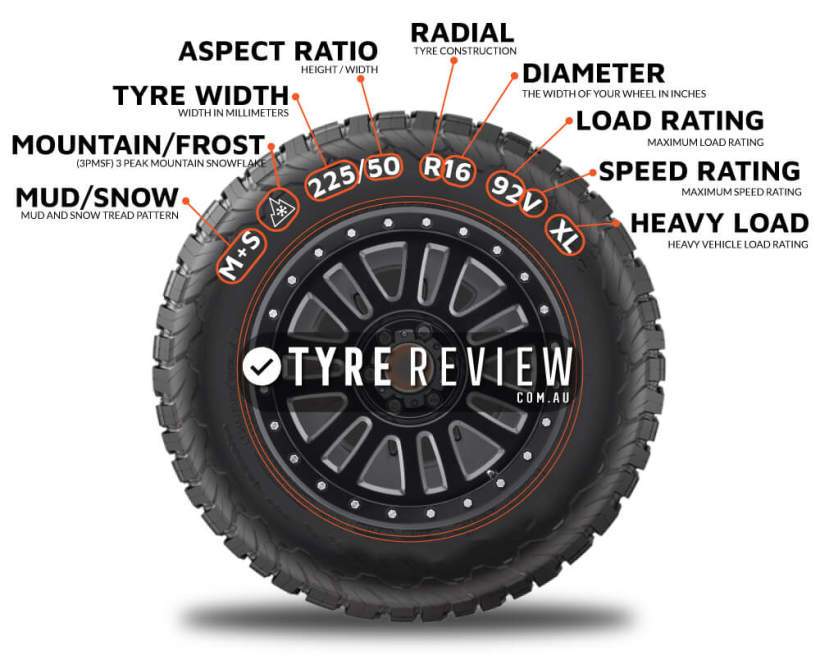
Full Article can on how to read a tyre size can be found here. How can I tell what size my Tyres are? | Tyre Review Australia
Frequently Asked Questions
Can I fit a wider tyre on my standard rim?
Sometimes, but only within the approved rim width range for that tyre. A tyre that is too wide or too narrow for the wheel can affect handling, wear, and safety. Always check rim compatibility before changing size.
Will bigger tyres affect fuel economy?
In many cases, yes. Larger or heavier tyres can increase rolling resistance and rotational mass, which may increase fuel consumption. The effect depends on the tyre model, size, tread pattern, vehicle, and driving conditions.
Q&A
Does tyre size affect my speedometer?
Yes. A larger overall diameter usually causes the speedometer to read lower than the vehicle’s actual speed, while a smaller overall diameter can cause it to read higher. The calculator helps estimate this difference.
Is it legal to change tyre size in Australia?
Tyre size rules can vary by state and territory, and requirements may depend on the vehicle type and modification. Before fitting a non-standard size, check local regulations and speak with a qualified tyre professional or relevant authority.
What if my vehicle is modified?
If your vehicle has a lift kit, lowered suspension, aftermarket wheels, or other modifications, fitment can change significantly. The calculator can help compare tyre dimensions, but physical clearance and legality should still be checked carefully.
Start Comparing Tyre Sizes
The Tyrereview.com.au Tyre Size Calculator is built to help Australian drivers make better tyre decisions.
Whether you are replacing your factory tyres, upgrading a 4WD, checking a tyre shop recommendation, or looking for a more affordable alternative size, the calculator gives you a simple way to compare your options before you buy.
Enter your current tyre size or vehicle details to get started, then use Tyrereview.com.au’s tyre reviews to see how different tyres perform on Australian roads.
You might also like